18th-Century George Washington Seating Fabric-Relic & 1816 Document
HISTORICAL EVALUATION & PROVENANCE REPORT
Artifact: 18th-Century George Washington Seating Fabric Relic & 1816 document.
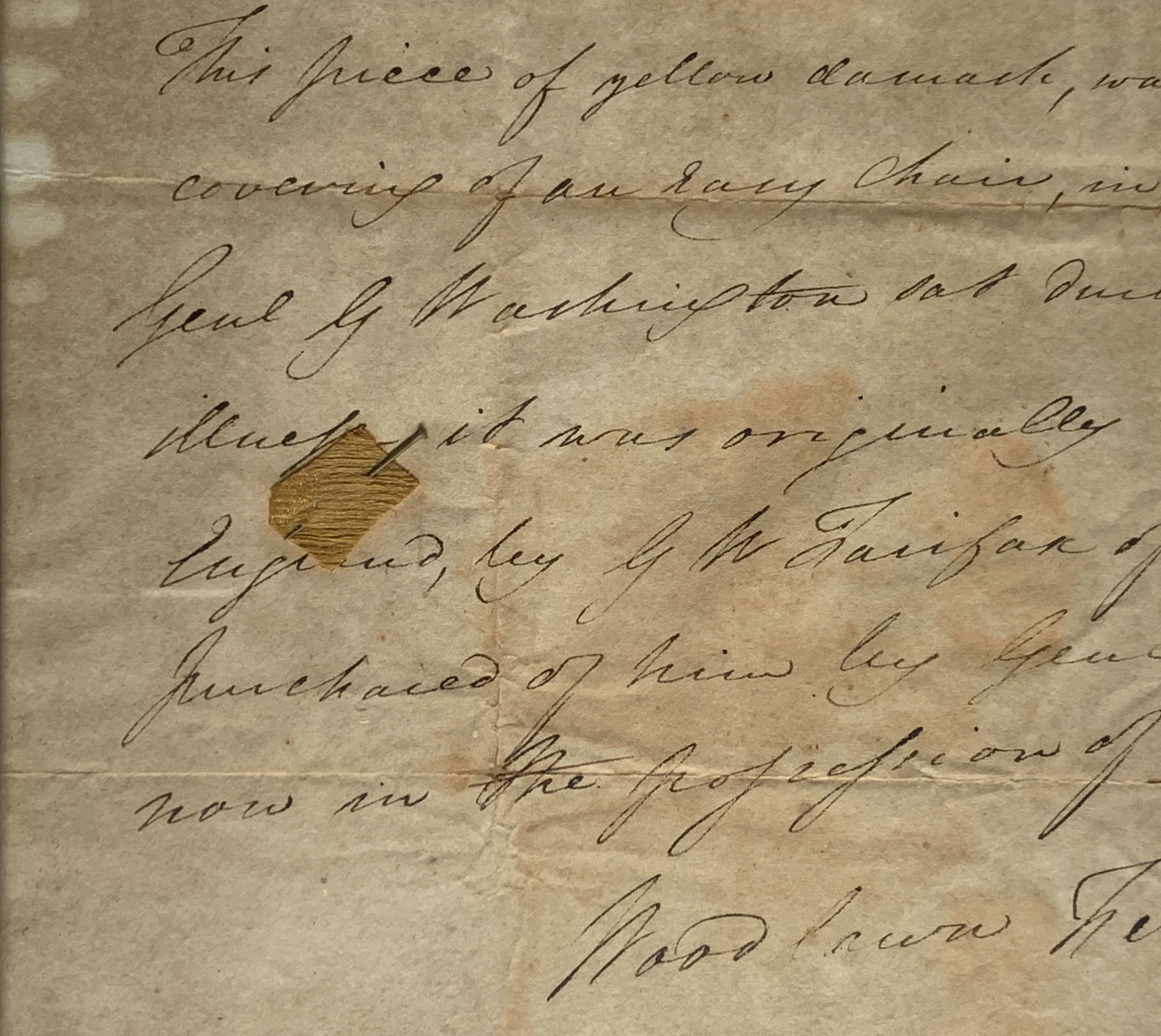
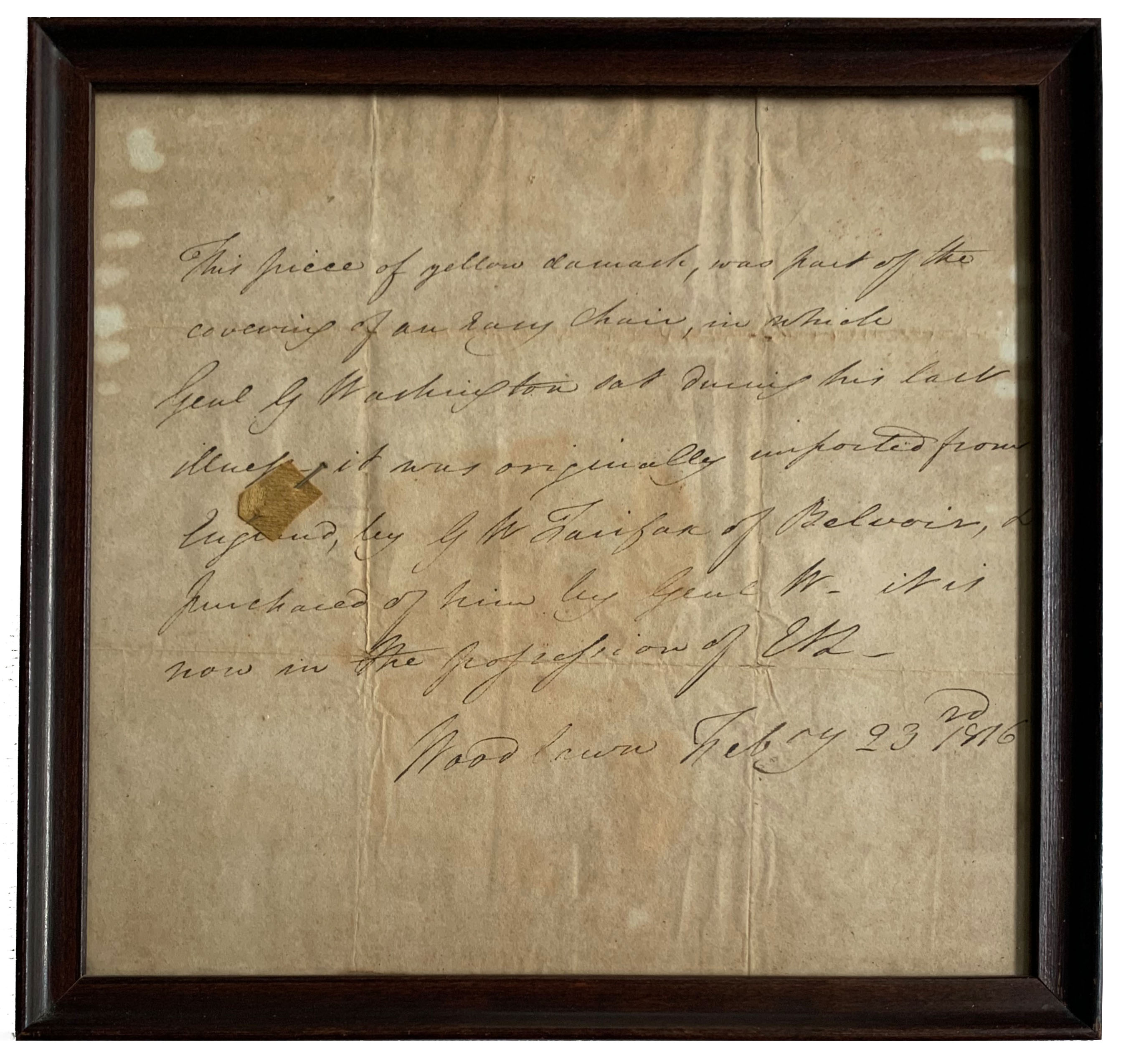
"This piece of yellow damask, was part of the covering of an Easy Chair, in which Genl. G. Washington sat during his last illness, it was originally imported from England, by G. W. Fairfax of Belvoir, & purchased of him by Genl. W. It is now in the possession of W. B. —Wood lawn Febry 23rd, 1816"
Document Transcription (verified Feb. 23, 1816)
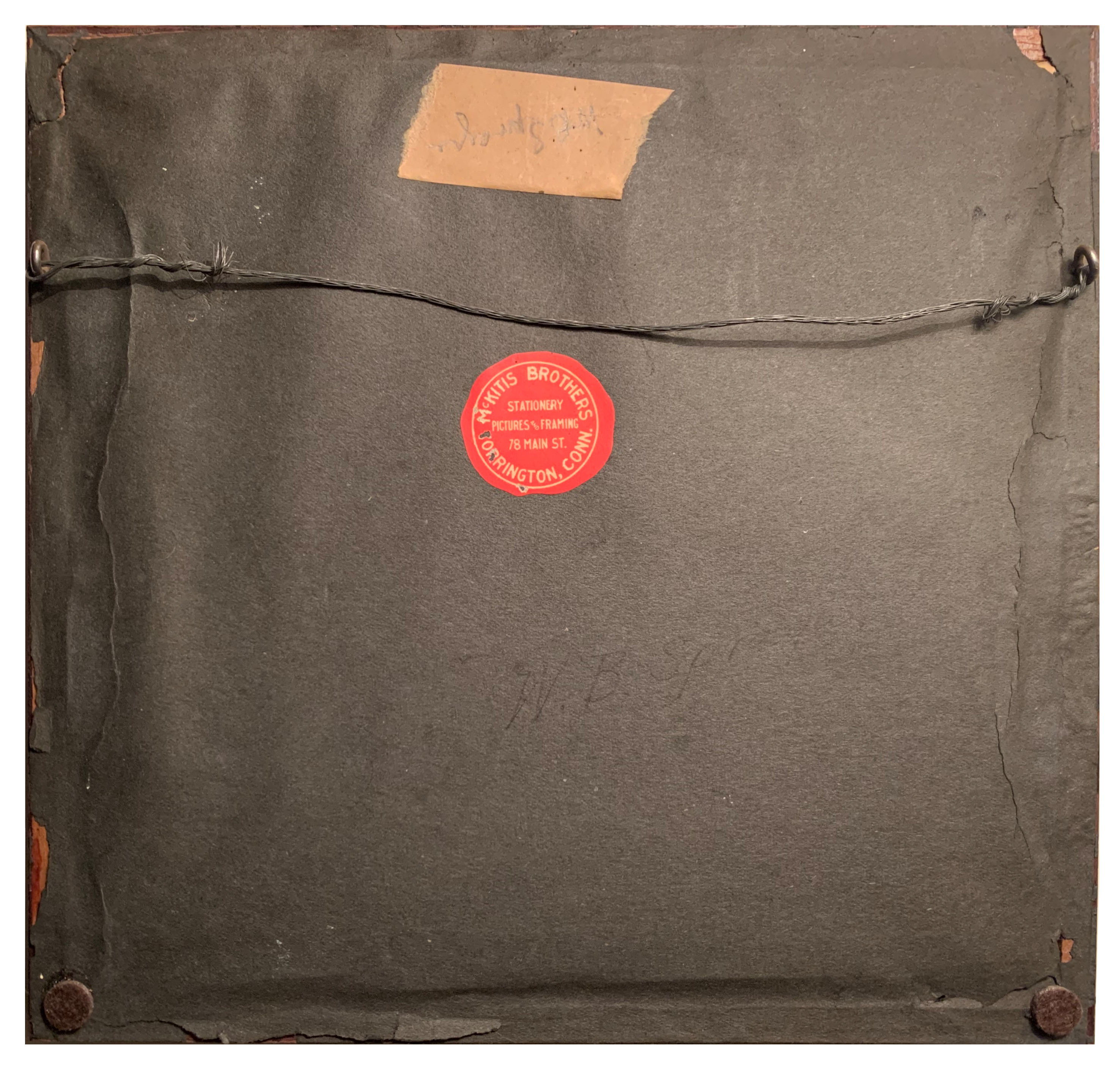
Provenance Track: Belvoir Plantation • Mount Vernon • Woodlawn Plantation • W.B. Sprague
Provenance & Material Timeline
1770
Creation and Importation: George William Fairfax imports a suite of high-end English chairs to Belvoir Plantation. The foundational backing fabric consists of hand-loomed, coarse worsted wool or a heavy wool-linen blend dyed with organic vegetable bases.
1774
The Belvoir Auction: The Fairfax family flees to England on the eve of the Revolutionary War. General George Washington ("Genl W.") personally attends the estate auction and buys the premium furniture suite to secure it for Mount Vernon.
1799-1815
The Woodlawn Descent: After General Washington's passing, his household property is distributed among direct heirs. His step-granddaughter, Eleanor "Nelly" Parke Custis Lewis, moves the historic furniture into the newly constructed Woodlawn Plantation.
Feb 23, 1816
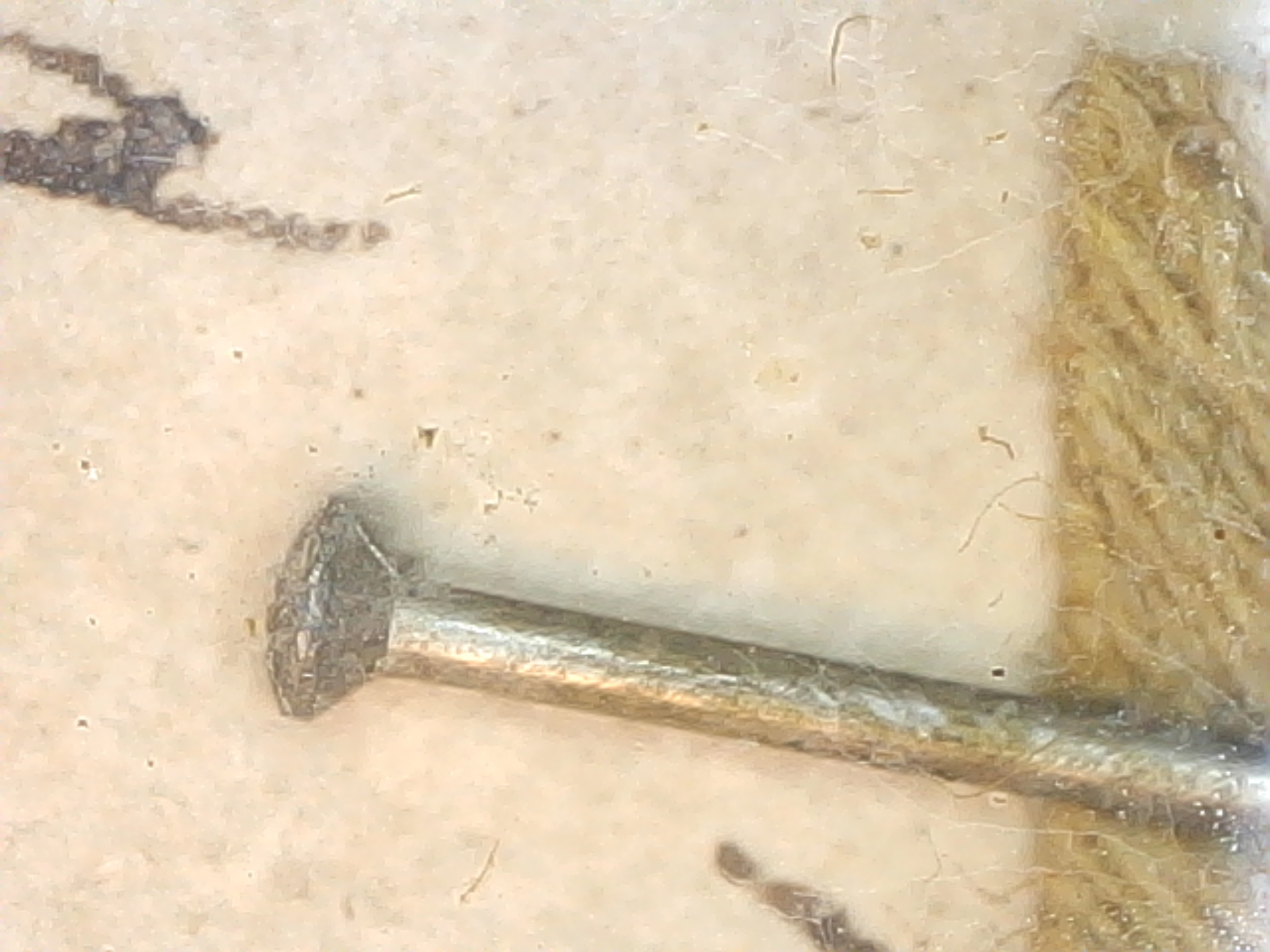
The Relic Presentation: Operating out of Woodlawn, Nelly Custis Lewis clips a structural fragment of the wool backing fabric as a memento. She pins it to a handwritten linen-rag certification card using a hand-wound spun-head wire pin, passing it to pioneering relic collector William Buell Sprague.
Detailed & Material Characteristics
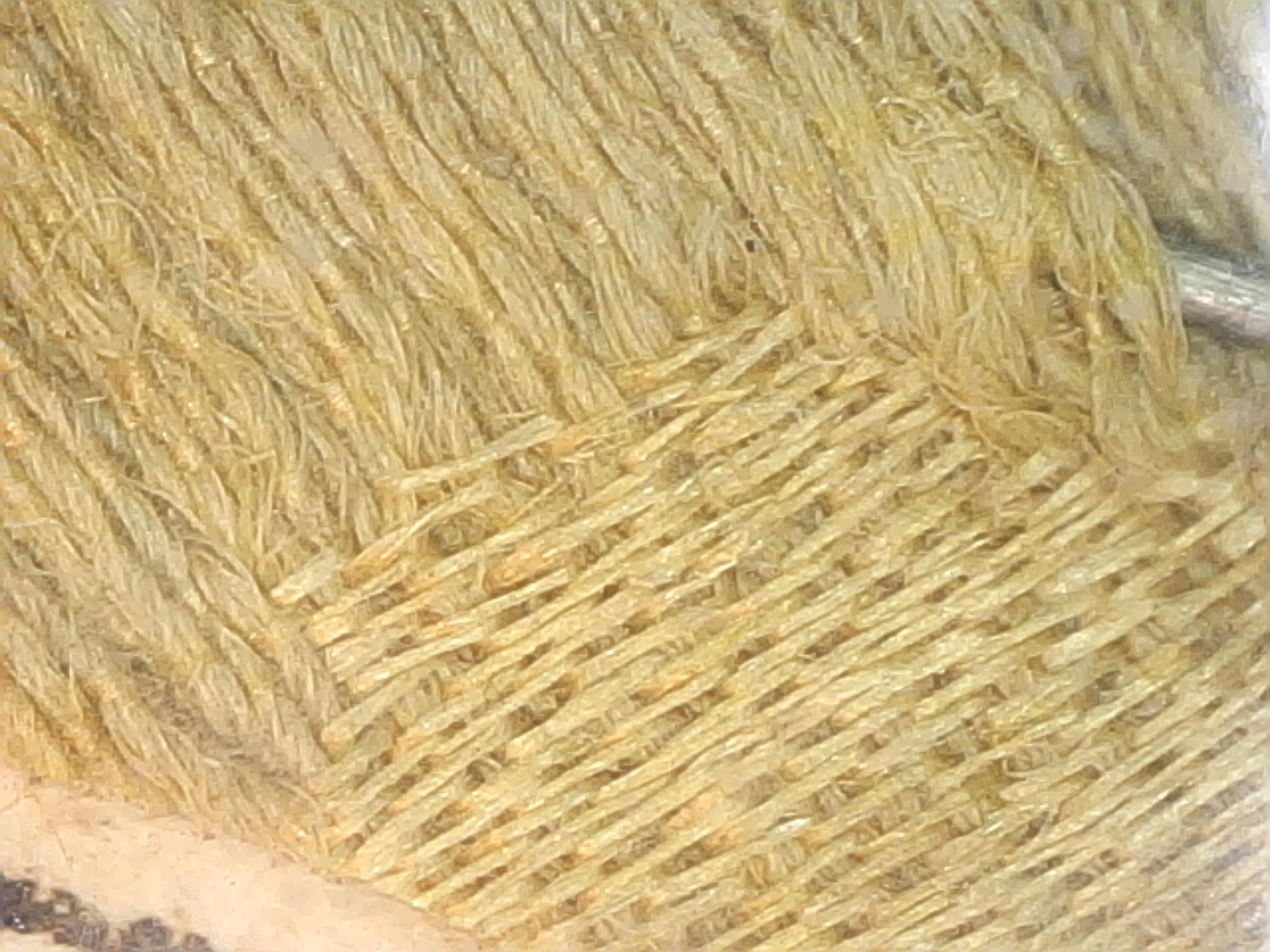
The Textile & Weave: The structural sample features an irregular yarn profile typical of late 18th-century manual wool manipulation. Slight variations in grain density indicate a hand-operated wooden loom, completely consistent with utility textiles utilized in early English upholstery backings.
The Hand-Wound Pin: The fastener holding the fragment features a distinct 'spun head' or 'wound head' made by wrapping a wire coil around a hand-cut shaft. This manual technique directly anchors the mounting process to the pre-1830 era.
Written on parchment/vellum paper.
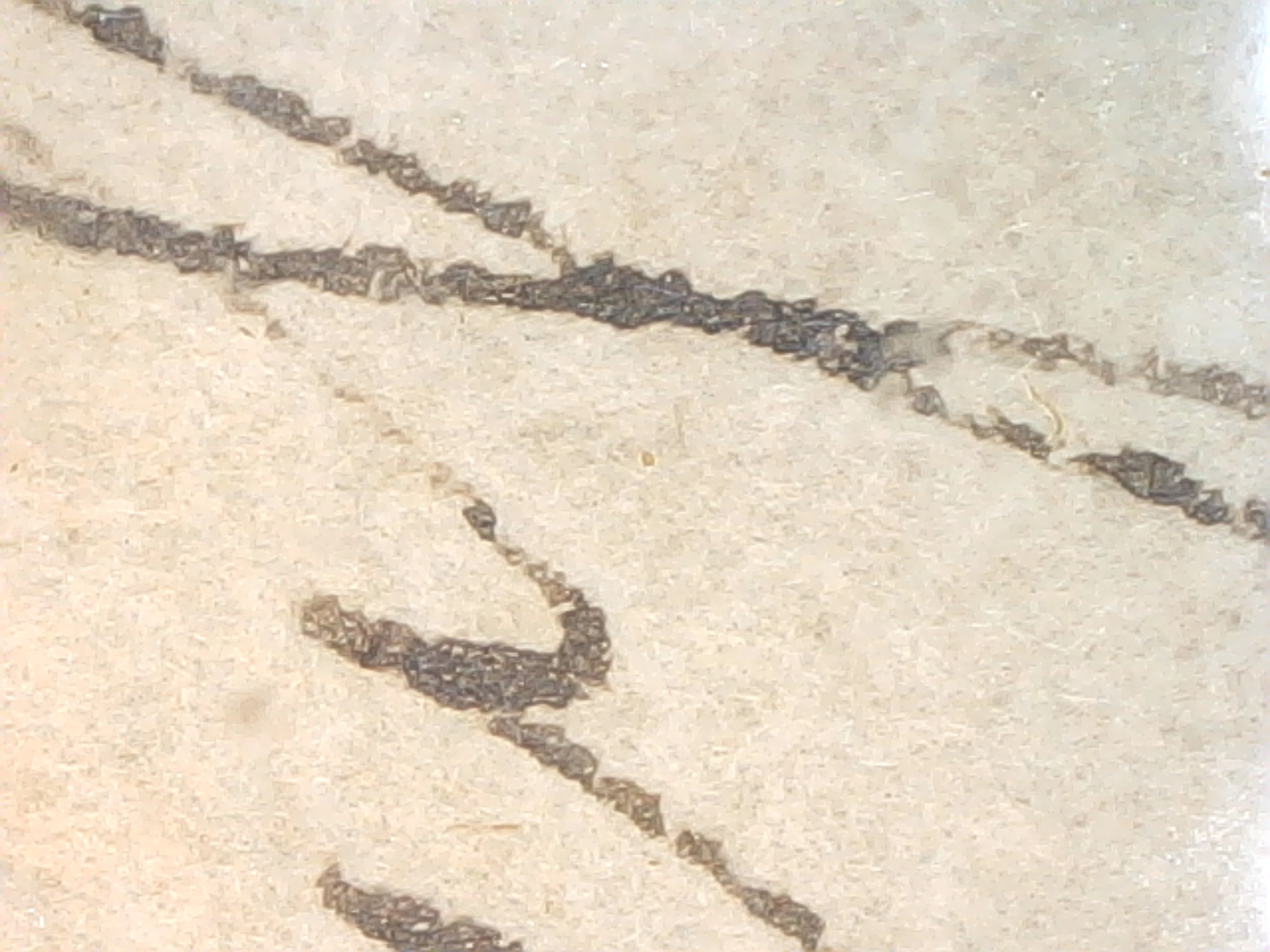
The Iron Gall Ink: The text was drafted using a bird quill and traditional iron gall ink. Over two centuries, the acidic compounds have oxidized, shifting from purplish-black to sepia-brown and bleeding characteristic amber 'halo' along the surrounding rag fibers.
Email: jtfrancis1775@gmail.com
Item: 19-5-10